Colonel Sanders: An Underrated Fashion Icon

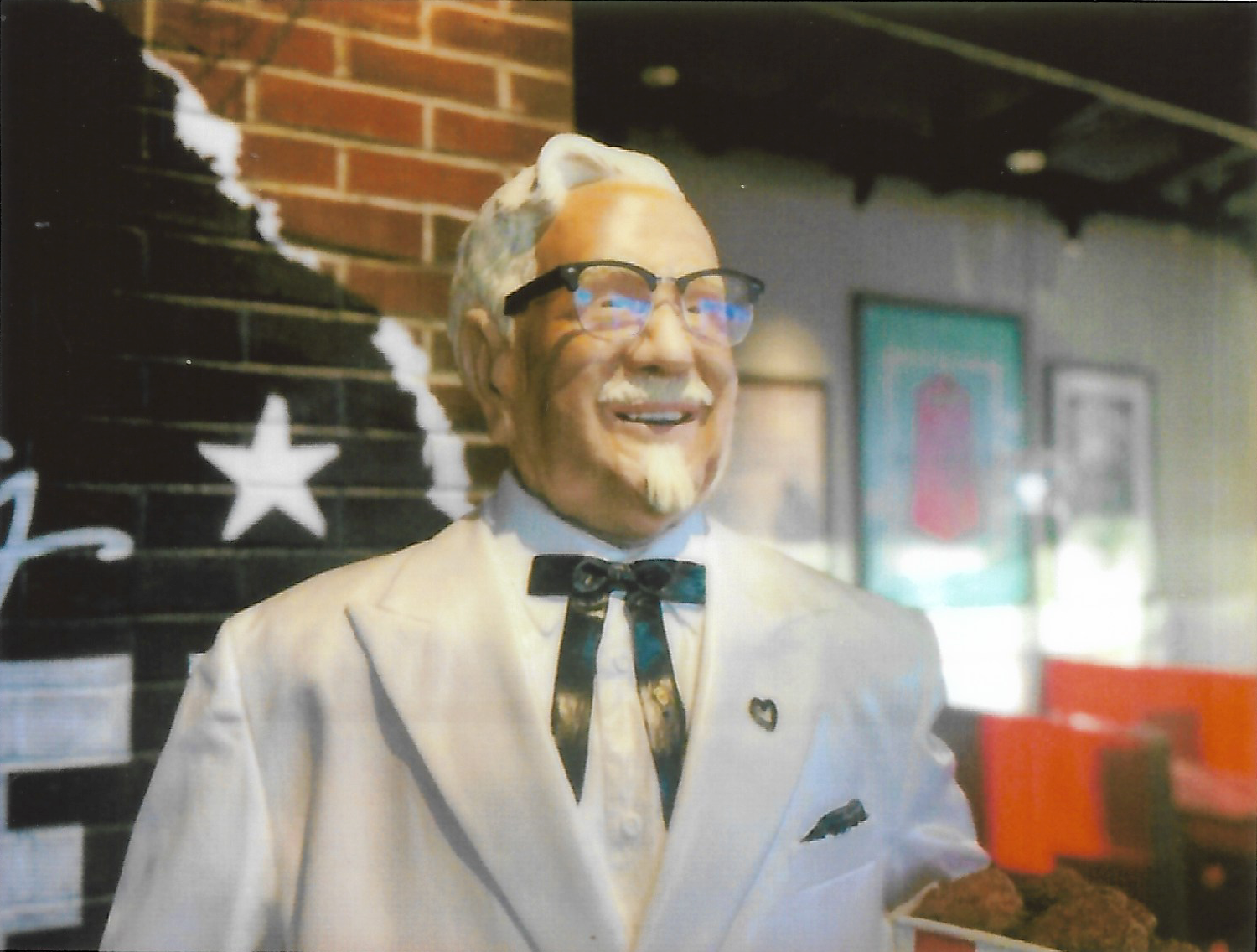
Made famous for bestowing the earth with finger lickin' good chicken, Colonel Sanders made a name for himself in his golden years as a restaurateur. We all know this story. However, I may be alone in thinking that the only thing more delicious than his drumsticks was his tasteful fashion sense. In fact, I'd go so far as to say that he wasn't just fashionable; he was a fashion icon. What's the difference?
Being fashionable results from following icons. Without the icons operating as catalysts, the masses would lack the creative direction for what is deemed "fashionable." (Note: someone may have a cool, interesting, and/or unique sense of style, but not be "fashionable." This is more so because being "fashionable" requires conformity to the mainstream. For this reason, being "fashionable" isn't objectively better than being personally stylish; it's just different. Phew. Glad I cleared the air on that.)
Fashion icons are typically defined by several notable qualities, including individuality, mainstream influence, and cultural impact. Secondary characteristics, like innovation and confidence, are noteworthy, although less consequential.
In this article, I will speak to the colonel's stylistic individuality, mainstream influence, and cultural impact as well as how these characteristics reflect his standing as an underrated fashion icon.
Individuality
First, let's break down the 11 Herbs and Spices™. If you find yourself down a rabbit hole of Colonel Sanders image searches (as one does), you'll find a uniquely tasteful concoction:
- Black western bow tie
- Double-breasted white suit
- Gold rings and watch
- Horn-rimmed glasses
- Cane
- Matching black leather belt and shoes
- Goatee
- Jacket/tie Pins
- Cufflinks
- Handkerchief
- Pen in shirt pocket
Sanders' look was distinct and original. The only attire with remote resemblance is a mid-20th century ice cream man, equipped with an optional white chore jacket, optional white paper hat, white button-down shirt (typically short sleeve), and a black bow tie. Otherwise, one would be hard-pressed (if at all able) to find an example of a double-breasted white suit with black leather and gold accessories prior to the Sanders era.
More importantly, his outfit was functional too. To adjust for seasonal changes, a light cotton suit in the summer was exchanged for a thicker wool suit in the winter. As for why Sanders even opted for a white suit at all, this decision was purely practical—had he worn a darker suit, flour would have been visible on his clothes.
Although monochromatic attire can appear boring; Sanders' execution was tastefully minimal. Never mimicking others, Sanders instead crafted a stylish and intentional look that reflected his identity and life, which later inspired others. Speaking of which…