"King Ink": A Post-Punk Ars Poetica

Ancient Roman poet Horace's Ars Poetica is perhaps the defining work of meta-literature: a poem written to advise poets on the art of writing poetry. The title alone is sufficient shorthand for self-referential creation, an idea that would mean nothing to me if I didn't have The Birthday Party's "King Ink" as my morning alarm sound. (In case you're unfamiliar with the song, "King Ink" is a standout track on The Birthday Party's 1981 LP Prayers on Fire... and if you're unfamiliar with the album, the most accurate description I've found is by music reviewer Mike Mansour, who called it "the audio equivalent of rabies.")
In this article, I will unpack singer and lyricist Nick Cave's exploration of the artist's life in "King Ink," with analysis that highlights Cave's three central themes.
Metaphor of the Artist as a Bug
King Ink feels like a bug,
And he hates his rotten shell.
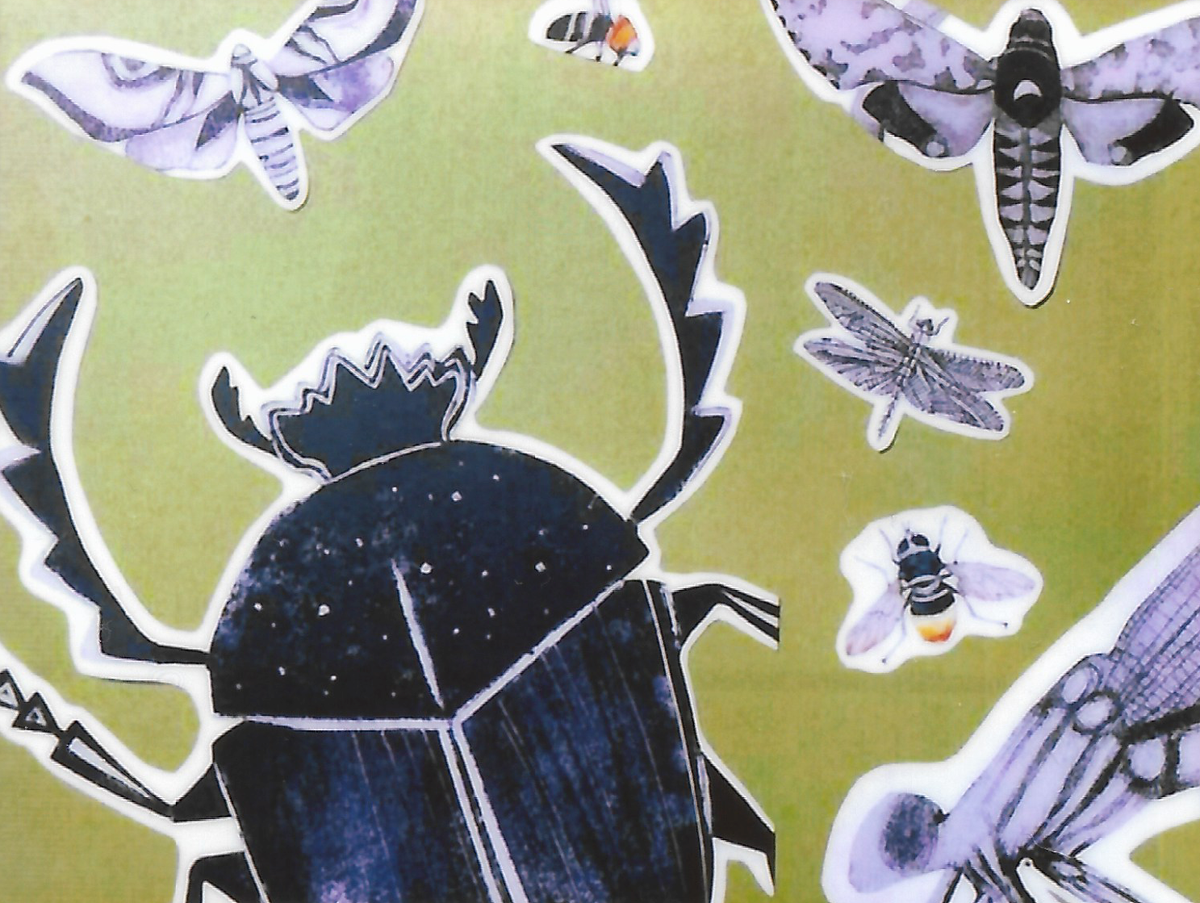
Cave yokes the artist, whom he refers to as "King Ink," to a bug—a charming irony. The discrepancy between crown and critter couldn't be more vast, but the connotations take it further. Bugs are small, annoying (hence the double meaning in "pest"), and—most importantly—forgettable. Although ink can be described as small (in storage and disposal) or annoying (when a mistake has been made), it is unforgettable. The permanence of ink creates friction against the impermanence of the bug, a juxtaposition Cave designs deliberately to highlight the insignificance that dogs even a "King." The emotional conflict runs deeper still—an artist, like a king, has the power to influence others, which can, in turn, provide fulfillment or the sense of an overbearing responsibility. The king who feels the weight of the mantle eventually loathes "his rotten shell," a visible reminder of his identity, not unlike the artist whose tattoos, piercings, and haircuts come to delineate his own.
Hating one's "rotten shell" also describes the reaction most artists have to their earlier output. After disseminating their work, artists often outgrow their earlier selves (i.e., molting their "shells"). When enough time has elapsed, they look back at their outgrown shells and feel disgust at what was once a part of them. They pursue ongoing growth in an attempt to reclaim control over their identities and protect themselves in the process (i.e., regrowing their "shells").